
Colección: Brocas para enrutador
Precision‑engineered tooling for clean cuts, long life, and professional CNC performance
Upgrade your CNC router with high‑quality bits and tool holders designed for accuracy, durability, and smooth cutting across a wide range of materials. Our tooling is manufactured to strict standards and balance‑tested to ensure stable, vibration‑free operation—even at high spindle speeds.

-
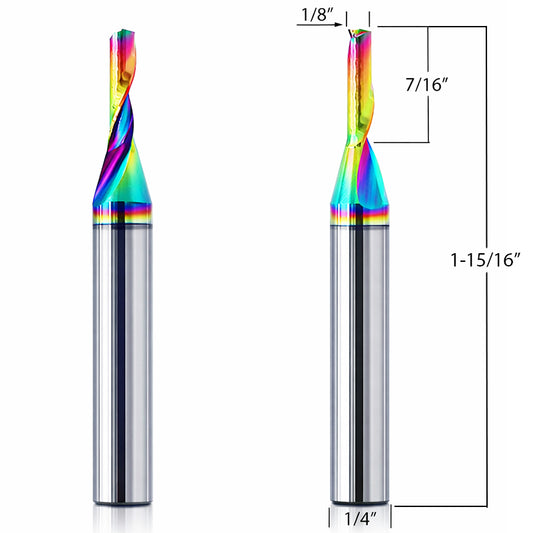
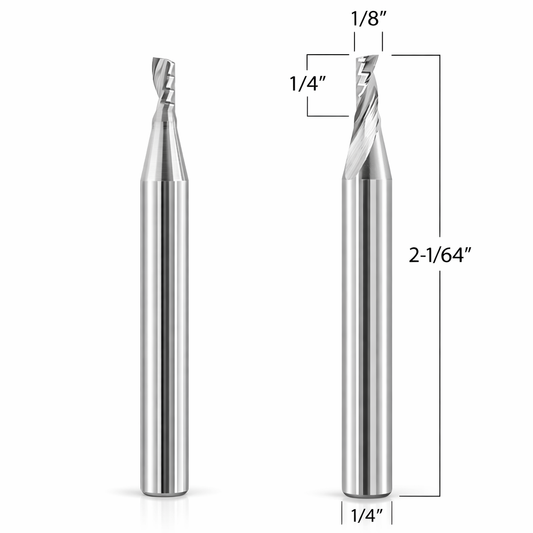
Aluminum Router Bits with 1/8-inch diameter for CNC Routers
Precio habitual $25.00Precio habitualPrecio unitario porAluminum Router Bits with 1/8-inch diameter for CNC Routers
Precio habitual $25.00Precio habitualPrecio unitario porAluminum Router Bits with 1/8-inch diameter for CNC Routers
Precio habitual $25.00Precio habitualPrecio unitario por -
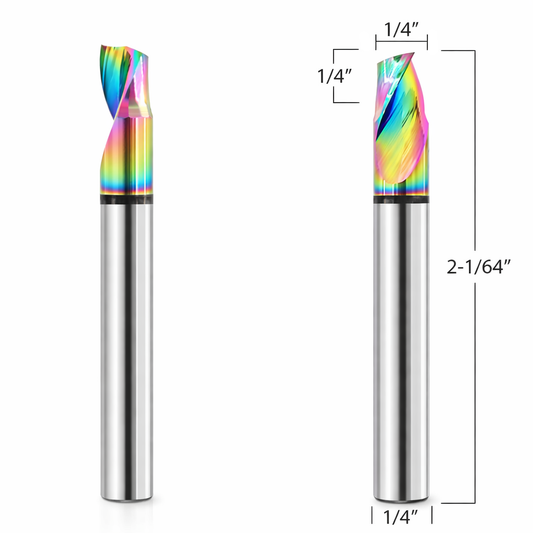
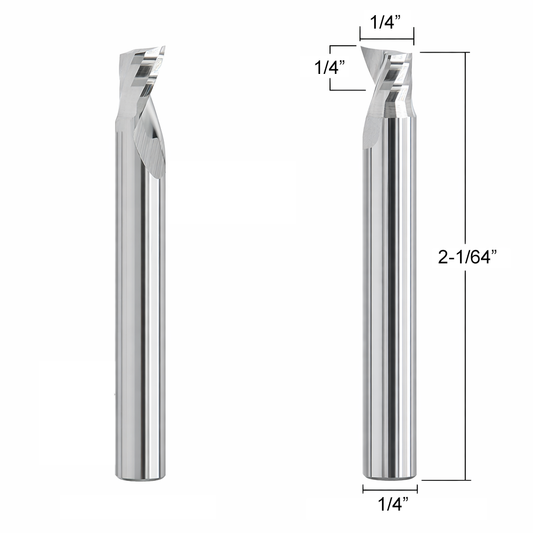
Aluminum Router Bits with 1/4-inch diameter for CNC Routers
Precio habitual $35.00Precio habitualPrecio unitario porAluminum Router Bits with 1/4-inch diameter for CNC Routers
Precio habitual $35.00Precio habitualPrecio unitario porAluminum Router Bits with 1/4-inch diameter for CNC Routers
Precio habitual $35.00Precio habitualPrecio unitario por -
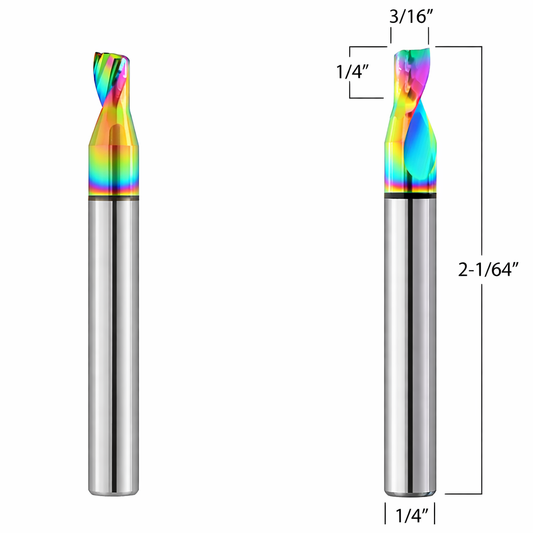
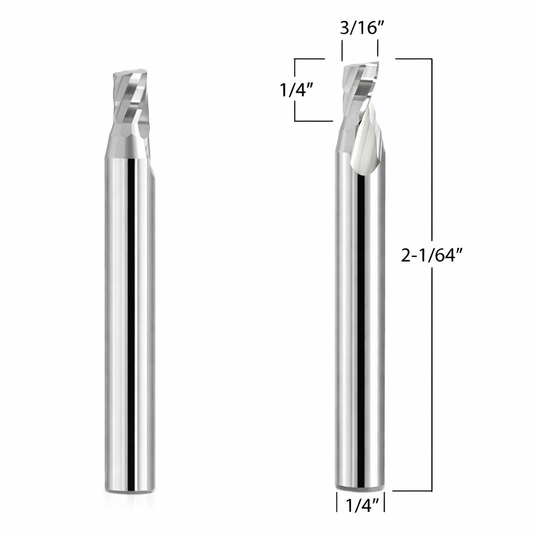
Aluminum Router Bits with 3/16-inch diameter for CNC routers
Precio habitual $35.00Precio habitualPrecio unitario porAluminum Router Bits with 3/16-inch diameter for CNC routers
Precio habitual $35.00Precio habitualPrecio unitario porAluminum Router Bits with 3/16-inch diameter for CNC routers
Precio habitual $35.00Precio habitualPrecio unitario por -
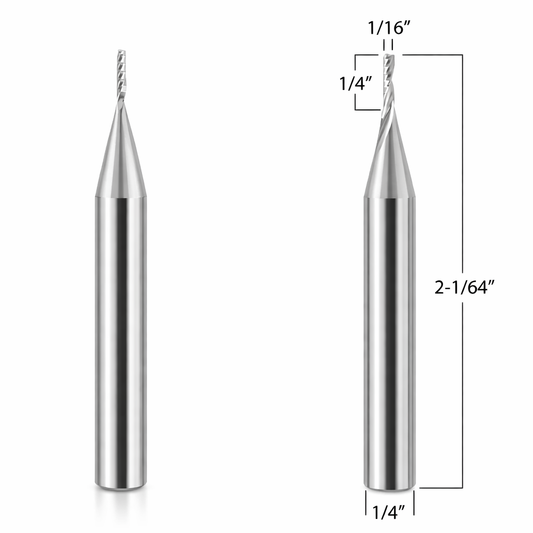
Router Bit with 1/16-inch diameter for CNC routers
Precio habitual A partir de $13.00Precio habitualPrecio unitario porRouter Bit with 1/16-inch diameter for CNC routers
Precio habitual A partir de $13.00Precio habitualPrecio unitario porRouter Bit with 1/16-inch diameter for CNC routers
Precio habitual A partir de $13.00Precio habitualPrecio unitario por -
Router Bits with 1/8-inch diameter for CNC Routers
Precio habitual A partir de $13.00Precio habitualPrecio unitario porRouter Bits with 1/8-inch diameter for CNC Routers
Precio habitual A partir de $13.00Precio habitualPrecio unitario porRouter Bits with 1/8-inch diameter for CNC Routers
Precio habitual A partir de $13.00Precio habitualPrecio unitario por -
Router Bit with 1/4-inch diameter for CNC Routers
Precio habitual A partir de $35.00Precio habitualPrecio unitario porRouter Bit with 1/4-inch diameter for CNC Routers
Precio habitual A partir de $35.00Precio habitualPrecio unitario porRouter Bit with 1/4-inch diameter for CNC Routers
Precio habitual A partir de $35.00Precio habitualPrecio unitario por -
Router Bits with 3/16-inch diameter for CNC Routers
Precio habitual $20.00Precio habitualPrecio unitario porRouter Bits with 3/16-inch diameter for CNC Routers
Precio habitual $20.00Precio habitualPrecio unitario porRouter Bits with 3/16-inch diameter for CNC Routers
Precio habitual $20.00Precio habitualPrecio unitario por -
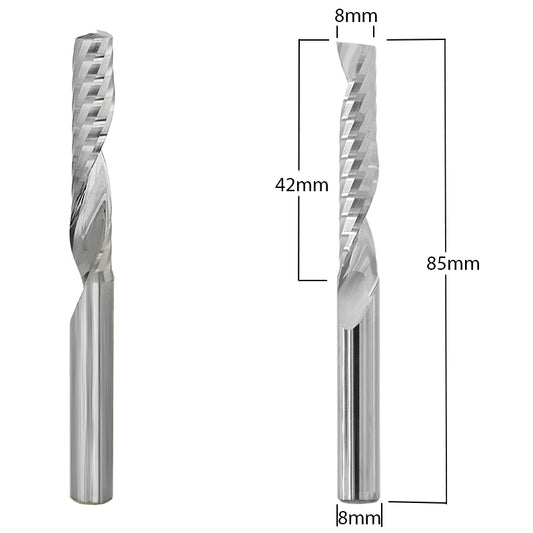
Router Bit with 8mm (5/16") diameter for CNC routers
Precio habitual $75.00Precio habitualPrecio unitario porRouter Bit with 8mm (5/16") diameter for CNC routers
Precio habitual $75.00Precio habitualPrecio unitario porRouter Bit with 8mm (5/16") diameter for CNC routers
Precio habitual $75.00Precio habitualPrecio unitario por -
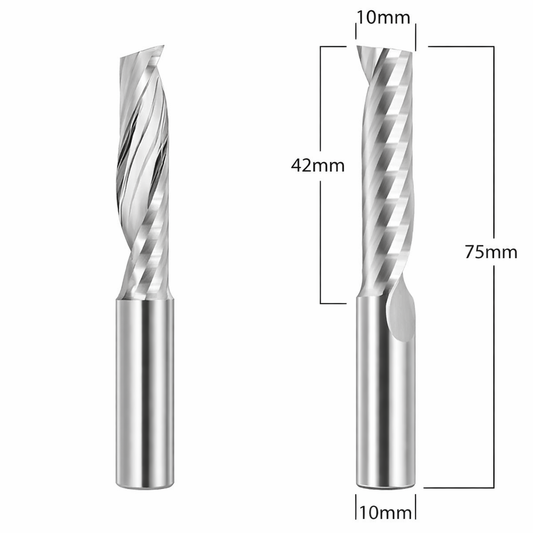
Router Bits with 10mm (3/8") diameter for CNC router
Precio habitual $150.00Precio habitualPrecio unitario porRouter Bits with 10mm (3/8") diameter for CNC router
Precio habitual $150.00Precio habitualPrecio unitario porRouter Bits with 10mm (3/8") diameter for CNC router
Precio habitual $150.00Precio habitualPrecio unitario por -
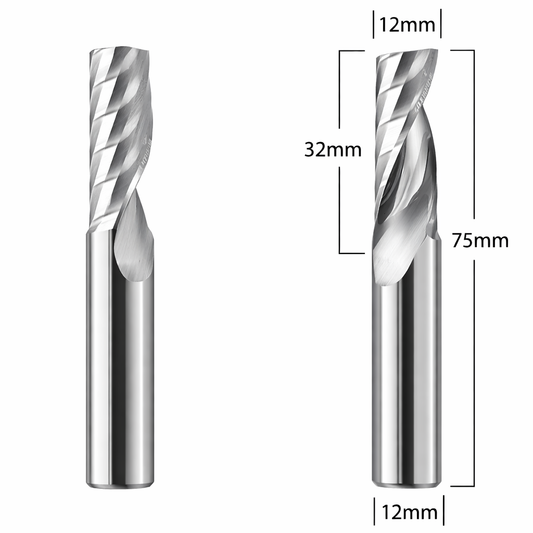
Router Bits with 12mm (1/2") diameter for CNC Routers
Precio habitual $225.00Precio habitualPrecio unitario porRouter Bits with 12mm (1/2") diameter for CNC Routers
Precio habitual $225.00Precio habitualPrecio unitario porRouter Bits with 12mm (1/2") diameter for CNC Routers
Precio habitual $225.00Precio habitualPrecio unitario por -
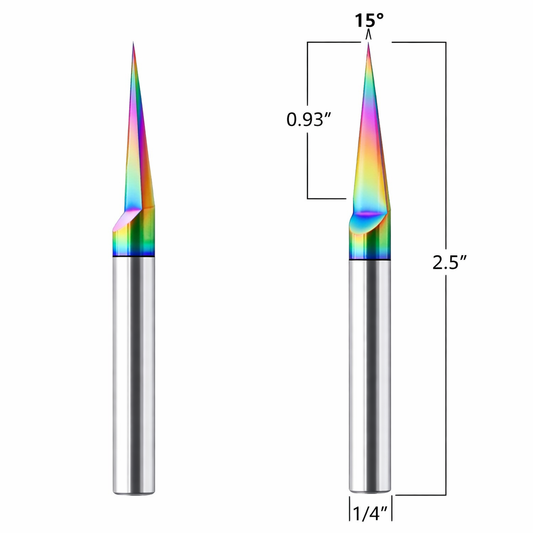
Metric Engraving Bit for CNC Router
Precio habitual $50.00Precio habitualPrecio unitario porMetric Engraving Bit for CNC Router
Precio habitual $50.00Precio habitualPrecio unitario porMetric Engraving Bit for CNC Router
Precio habitual $50.00Precio habitualPrecio unitario por -
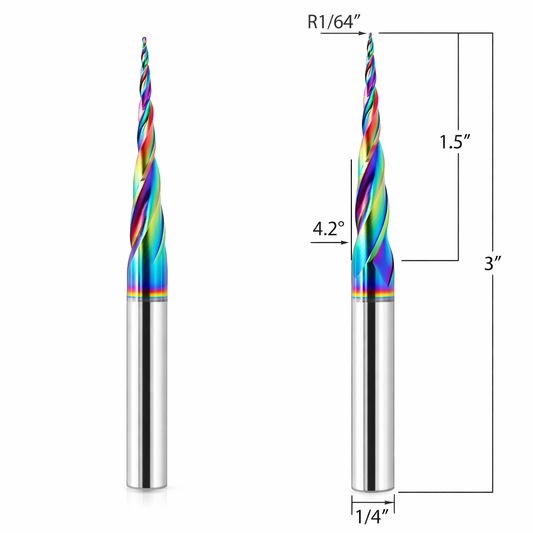
Taper ball-nose CNC bit designed for CNC carving applications
Precio habitual A partir de $65.00Precio habitualPrecio unitario porTaper ball-nose CNC bit designed for CNC carving applications
Precio habitual A partir de $65.00Precio habitualPrecio unitario porTaper ball-nose CNC bit designed for CNC carving applications
Precio habitual A partir de $65.00Precio habitualPrecio unitario por












Tool Operation Notices
-
Tool Selection
- Our brand’s tools are designed for professional users, with different tools created for different materials.
- They are mainly divided into five categories: particle board, MDF, solid wood, acrylic, and artificial stone.
- Professional users must select the appropriate tool according to the material to achieve the best cutting performance and durability, and to avoid tool breakage caused by excessive pressure.
- All tools are designed to rotate clockwise.
-
Balance Testing
- Every tool undergoes balance testing upon completion to ensure there is no runout.
- To further guarantee stability during use, please pay attention to selecting high-quality equipment and collets.
-
Collet Requirements
- Always use a collet of the correct size.
- If the collet is found to be out-of-round or worn, it will fail to properly clamp the tool.
- Replace immediately with a standard collet to avoid dangerous situations such as vibration, tool ejection, or breakage during high-speed rotation.
-
Tool Shank Installation
- Installation must comply with EU regulations.
- For example, a shank diameter of 12.7 mm must be clamped to a depth of 24 mm to ensure the tool shank can withstand the required pressure.
-
Speed Settings
- For tools with larger diameters, set the spindle speed according to the speed chart.
- Feed the tool forward slowly and maintain a uniform feed rate.
- Do not stop feeding during cutting, as this may damage the tool or workpiece.
- Suggested router speeds
Bit Diameter Maximum Speed 1” (25mm) 24,000 RPM 1-1/4" - 2” (30 - 50mm) 18,000 RPM 2-1/4” - 2-1/2” (55 - 65mm) 16,000 RPM 3” - 3-1/2” (75 - 90mm) 12,000 RPM
-
Tool Replacement
- When a tool becomes dull, replace it with a new one immediately.
- Do not continue using a worn tool, as this may cause tool breakage and workplace accidents.
-
Blade Length Selection
- Always select a cutting edge length greater than the workpiece depth.
- For example, to mill a groove with a depth of 12.7 mm, choose a tool with a cutting edge length of 25.4 mm.
- Avoid using tools with cutting edge lengths equal to or less than the workpiece depth.
-
Safety Precautions During Operation
- Operators must wear safety glasses and use safety push handles.
- When using tabletop machines, also install anti-kickback devices to prevent the workpiece from rebounding during high-speed cutting and causing accidents.